How are we regenerative?
Our
Regenerative
Practices
-
We use several different cover crop mixes throughout the vineyard that help to promote soil health, retain moisture, add nitrogen, improve soil structure, create insectary habitats and provide fodder for our babydoll sheep year round.
We are embarking on a project with RegenWA to create a biodiverse and multi-use boundary close to the vineyard. This will help to retain water at roots, fix nitrogen, draw down carbon, create alternative eating and habitat areas for birds and other fauna, as well as provideing multi functional trees. These trees may provide wood for furniture/ fire, millable food seeds, fruit and nuts, indigenous bush tucker and protect our vineyard from neighbouring spray drift. We are utilising "companion" trees that will hopefully not compete with the vines, this will be part of the trial. -
Soil health is hard to improve immediately. These things take time and patience. In year 1, we didn't see too much progression in microbe populations and we were still learning the areas that were poorer than others.
In year 2 we were able to see a greater improvement, shown through vine health and performance, as well as through biological soil analysis.
To improve the soil we ceased all use of pesticide, herbicides and non-biological fungicides. This includes sulphur and copper which are widely used across organic vineyards as mildew protection. I've always believed covering a leaf in sulphur would be like putting heavy foundation on your skin everyday. It doesn't allow the pores to function and breathe. Reducing the capacity for photosynthesis and not allowing the plant to regulate itself as effectively. The additional effect is these sprays run off the leaf into the ground. A ground that we want to be fungal dominant.Instead we apply beneficial products, that help boost microbial populations and allow the plant to function optimally. These include: seaweeds, fish emulsions, compost tea, bacillus bacteria, orange oil, yukka, molasses, humates and potassium silicates. We have also trialled milk, charcoal, lactoferrin protein and polyoxin-D zinc.
We have also been working on improving soil cover throughout the year. We have done this by seeding several beneficial mixes across the whole site, to ensure no bare ground.
-
We began with a small group of Dorper-cross sheep. They were lovely to have around and helped with the grass, however they liked to munch on the vines and often enjoyed an adventure next door!
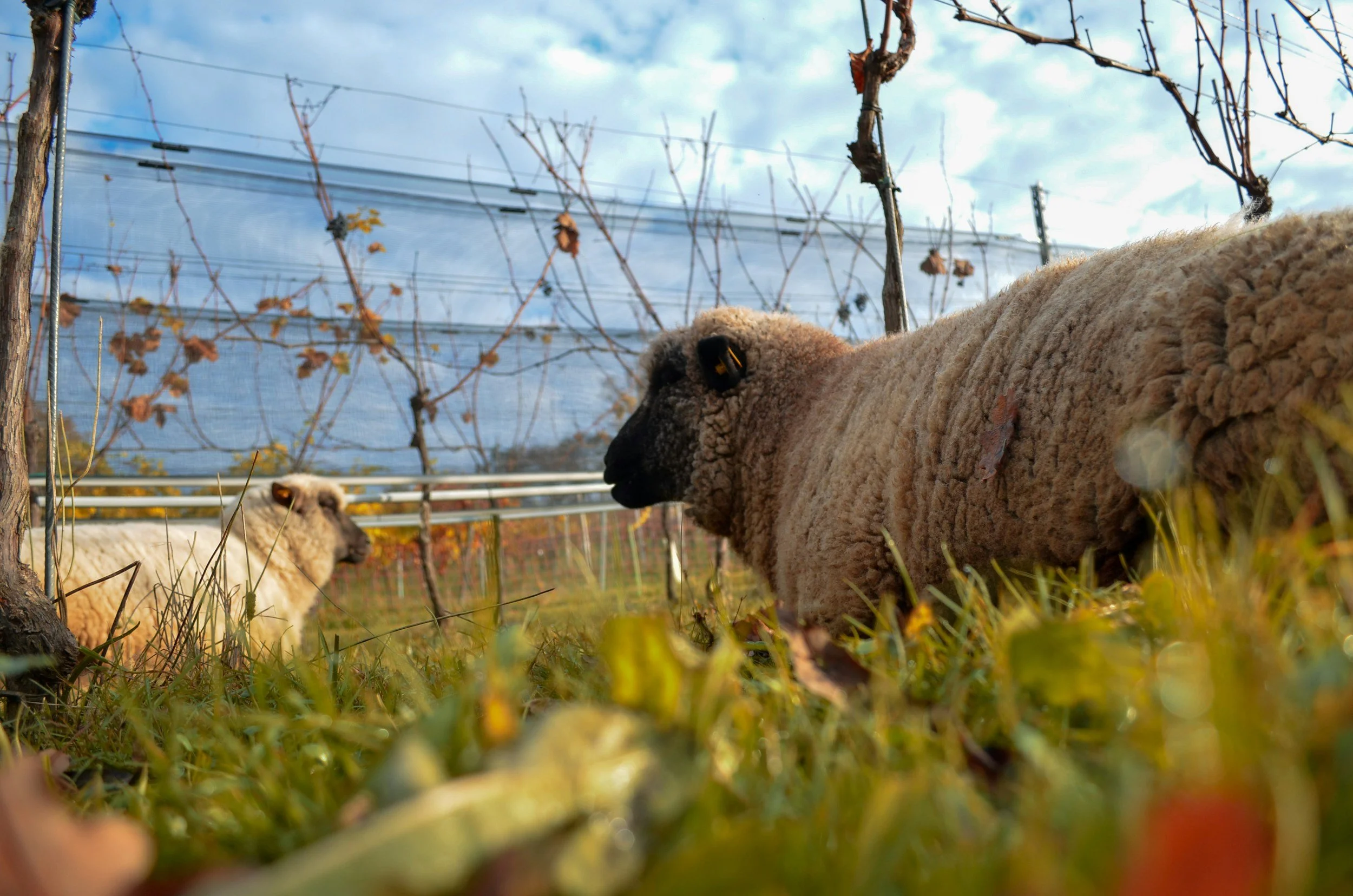
Now, we have a smaller flock of baby doll sheep. They are calm and easy to manage in our grazing system, which helps us keep the grass at a healthy length, in order for it to grow back quickly. Having fresh grass improves the quality of fodder for the sheep as well.
We aim to move the sheep between 5 separated areas in the vineyard, depending on the grass length. We also have a designated "summer" paddock that has been seeded with high quality pasture for when the grapes are starting to ripen. Although due to the height of the vines and size of sheep we have the option to keep them in the vineyard even when fruit ripens!
The sheep provide other benefits too: their manure fertilises the soil, their wool can be made into warm hats, and they taste great.
We have plans for poultry down the track, but need to get some better fencing and infrastructure together beforehand. -
We offer the opportunity for learning through our demonstration areas and would like to host community workshops in the future.
We contribute where we can, including being part of our local Kaloorup Bushfire brigade. -
We've gone off grid!
Off-grid solar systems offer numerous environmental benefits that contribute to a more sustainable and eco-friendly future.
Reduced Carbon Footprint: By harnessing solar energy, off-grid systems significantly lower reliance on fossil fuels, which are major contributors to greenhouse gas emissions. This shift helps combat climate change and reduces air pollution.
Sustainable Energy Source: Solar energy is renewable and abundant. Unlike non-renewable resources, which can deplete over time, sunlight is consistently available, allowing for sustainable energy production without long-term environmental degradation.
Local Empowerment and Resilience: Off-grid systems encourage local energy independence, reducing the carbon footprint associated with electricity transportation. Communities can harness solar power, lowering reliance on centralised infrastructure that often takes a toll on the environment.
-
We don't have the luxury of waste collection, so it has been really important for us to reduce our waste or use products we know will break down and not end up in landfill.
We have some beautiful tree'd areas on the farm that we use for our firewood and mulching requirements. Our green waste goes straight back into the ground and we hope to set up a sustainable market garden so that we can produce most things we need on the land.We make our own compost using the Soil Food Web approach and this year we plan to make our own seaweed and fish emulsions to avoid the plastic drum packaging. There are still a few things we need too buy in, but we will work on reducing this each year.
-
By keeping tussocked grass long through the majority of the year and allowing these grassy strips, we help to support the beneficial beetle and spider populations.
Research has shown that numbers of predatory spiders and beetles can rapidly increase grass margins. They over-winter in these areas and travel out during Spring to prey on crop pests such as; aphids, weevil nymphs, snail eggs and soft bodied insects. (Game Conservancy, Southampton University)
We are bee friendly with all our spraying activities and have a small hive for honey bees in our "summer paddock" in the back corner. We are mindful about keeping the hive small to prevent disruption to areas we have seen native bees foraging.
We support the native bees by keeping and replanting plenty of Australian native bush plants for them to forage in. We also have an abundance of hidey holes around the vineyard for these solitary bees to find shelter.
We have plenty of owls, hawks, eagles and microbats around the area, but the next project is to create some habitat boxes to entice them to breed and stay close!
-
We should really call this section "trial and error".
There are a lot of mad ideas that run through our minds. George certainly doesn't like following the rules and relies heavily on common sense when it comes to working with nature and plants.
"Do you never just do things normally?" has been said to her by many a boss over the years. Or, "that will never work" "you've just been lucky so far"... the list goes on. But if we can afford it, enjoy it and want something better, we will keep trying and innovating.
Please feel free to get in touch if you're curious to learn more. Here are our current trials:
Copper banding for snail prevention
Living undervine mulch that cools roots/ ground (using native Pigface)
Native prostrate plants undervine to suppress Kikuyu and provide permanent insectary habitats
RegenWA collab for beneficial boundary
Going fungicide free without disease
Charcoal water applied as foliar for powdery mildew reduction (completed*)
Lactoferrin protein applied as foliar for powdery mildew prevention (completed*)
Yucca and "cooling" plant extracts for moisture retention and heat stress prevention in leaves - Aloe/ cucumber, etc.
Vitiforestry -planting fruit, flower and nut trees within the vineyard to increase biodiversity above and below ground. Increasing VAM
FOLIAR (SPRAY) PROGRAMME 2024/5
We want to be clear about what happens to our vines and vineyard during the growing season. This helps you make informed choices and support those who are genuinely sustainable and eco-friendly.
Date: 5/11/24
Wind Direction: SE Temperature: 21
Wind Speed: 12kmph Humidity: 65%
Seaweed - full of essential oils, amino acids and minerals; to boost the plants strength and stimulate immunity.
Molasses - rich in micro and macro nutrients to help with moisture retention and boost cell structure. The molasses also increases the sugar content on the leaf making it hard to digest for certain insect pests.
Crop Biolife - this product is made up of Yucca extract that helps boost the water holding capacity in the leaf and bitter orange extract (flavonoid).
“The flavonoids in CropBioLife stimulate the already existing flavonoids in plants and have shown to significantly boost their health and improve overall production.”
There are some antimicrobial CBL, therefore we avoid adding compost teas or biological based products to this particular mix.
Polyoxin-D Zinc salt - this products functions as a chitin synthesis inhibitor, limiting the production of chitin for fungal cell walls. Specifically that of powdery mildew. This is classed as a bio-fungicide. Made from binding fermented bacteria with Zinc.
Tea Tonic - We used several dried herbs to create a tea blend that would be beneficial for the vines and also help to inhibit any negative fungal growth.
Meadowsweet + Willow bark - anti fungal properties with the salicylic acid component.
Echinacea + Rosehip - anti-viral, anti-inflammatory, anti-bacterial. Helps to restore tissue and provide valuable vitamins and nutrients.
Aloe juice - to aid cell healing and moisture retention in the leaves, helping to combat the effects of heat stress.
Molasses - rich in macro and micro nutrients to help with moisture retention and to boost cell structure. Increasing Prix level in the levels to aid in pest resistance.
Date: 14/12/24
Wind Direction: SW Temperature: 26
Wind Speed: 15kmph Humidity: 48%
Date: 18/1/25
Wind Direction: SSE Temperature: 18
Wind Speed: 16kmph Humidity: 54%
Tribus Bacillus amyloliquefaciens - these beneficial bacteria inhibit the germination of powdery mildew spores. It can also induce systemic resistance in plants, which helps them defend against pathogens.
FOLIAR (SPRAY) PROGRAMME 2024/5
We want to be clear about what happens to our vines and vineyard during the growing season. This helps you make informed choices and support those who are genuinely sustainable and eco-friendly.
FOLIAR (SPRAY) PROGRAMME 2024/5
We want to be clear about what happens to our vines and vineyard during the growing season. This helps you make informed choices and support those who are genuinely sustainable and eco-friendly.
Date: 5/11/24
Wind Direction: SE Temperature: 21
Wind Speed: 12kmph Humidity: 65%
Seaweed - full of essential oils, amino acids and minerals; to boost the plants strength and stimulate immunity.
Molasses - rich in micro and macro nutrients to help with moisture retention and boost cell structure. The molasses also increases the sugar content on the leaf making it hard to digest for certain insect pests.
Crop Biolife - this product is made up of Yucca extract that helps boost the water holding capacity in the leaf and bitter orange extract (flavonoid).
“The flavonoids in CropBioLife stimulate the already existing flavonoids in plants and have shown to significantly boost their health and improve overall production.”
There are some antimicrobial CBL, therefore we avoid adding compost teas or biological based products to this particular mix.
Polyoxin-D Zinc salt - this products functions as a chitin synthesis inhibitor, limiting the production of chitin for fungal cell walls. Specifically that of powdery mildew. This is classed as a bio-fungicide. Made from binding fermented bacteria with Zinc.
Tea Tonic - We used several dried herbs to create a tea blend that would be beneficial for the vines and also help to inhibit any negative fungal growth.
Meadowsweet + Willow bark - anti fungal properties with the salicylic acid component.
Echinacea + Rosehip - anti-viral, anti-inflammatory, anti-bacterial. Helps to restore tissue and provide valuable vitamins and nutrients.
Aloe juice - to aid cell healing and moisture retention in the leaves, helping to combat the effects of heat stress.
Molasses - rich in macro and micro nutrients to help with moisture retention and to boost cell structure. Increasing Prix level in the levels to aid in pest resistance.
Date: 14/12/24
Wind Direction: SW Temperature: 26
Wind Speed: 15kmph Humidity: 48%
Date: 18/1/25
Wind Direction: SSE Temperature: 18
Wind Speed: 16kmph Humidity: 54%
Tribus Bacillus amyloliquefaciens - these beneficial bacteria inhibit the germination of powdery mildew spores. It can also induce systemic resistance in plants, which helps them defend against pathogens.
FOLIAR (SPRAY) PROGRAMME 2024/5
We want to be clear about what happens to our vines and vineyard during the growing season. This helps you make informed choices and support those who are genuinely sustainable and eco-friendly.